An Easy Guide to Managing & Organizing Food Containers
ORGANIZING TIPSPROFESSIONAL ORGANIZING
Devaki Shinkre
12/20/20254 min read
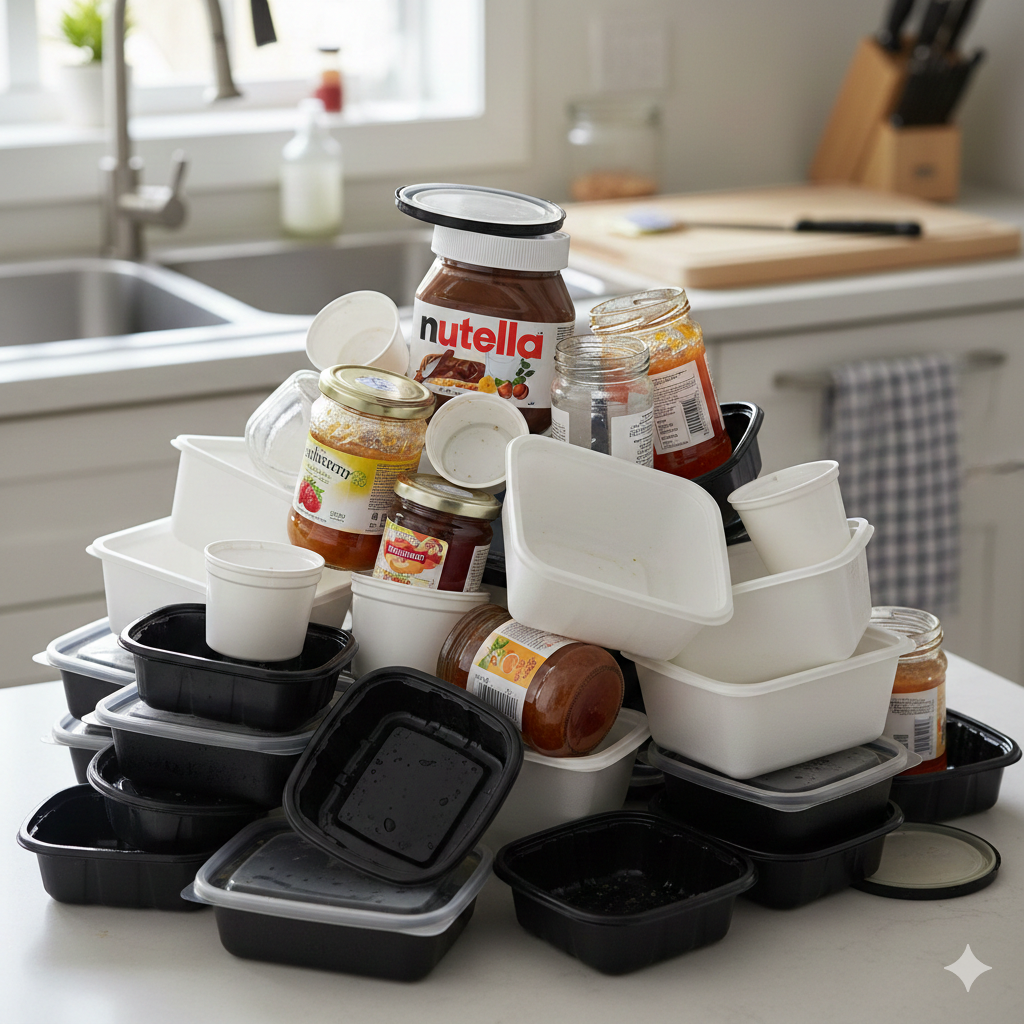
With the advent of Swiggy and Zomato, ordering-in food has become so much more convenient than getting out of your home, drive to the restaurant of your choice and enjoy a meal. But with all this convenience comes another huge problem. Every time you order food, your food arrives in disposable plastic containers. And even though these containers are meant for single-use, most middle-class Indian homes love to reuse them over and over. The real issue begins when the kitchen slowly starts getting cluttered with these food containers. In this blog post, we will discuss how to save our kitchens from this disaster.
To get started, we need to recognize that not all food containers are created equal. Let’s break them down into three categories.
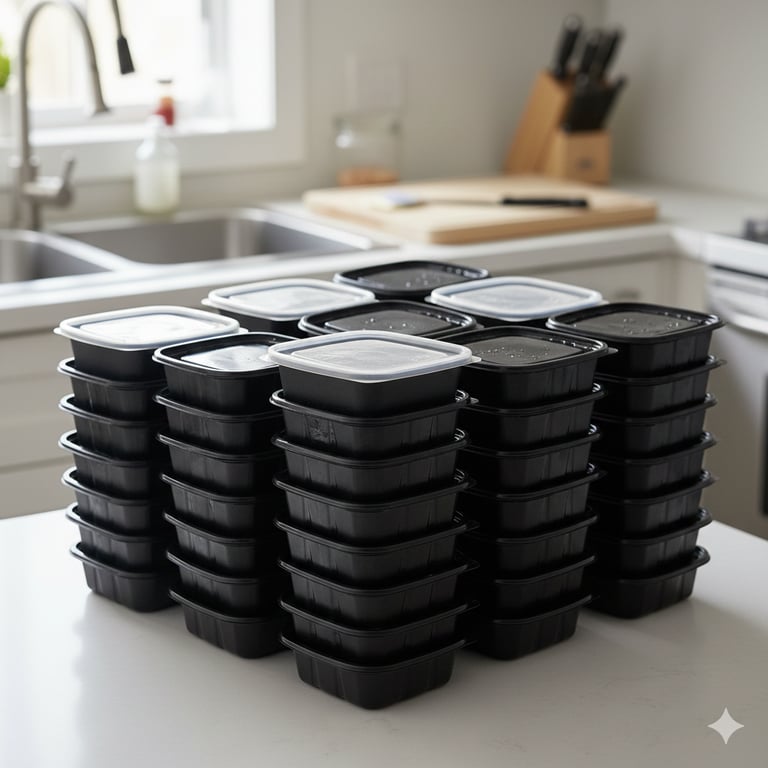
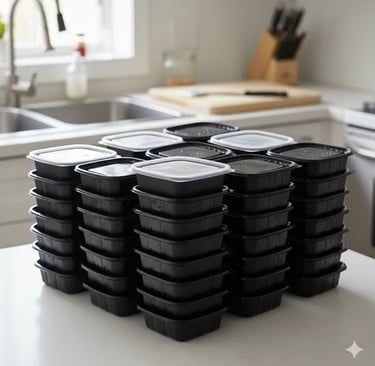
1. Black plastic food containers:
If your food gets delivered in those black plastic containers, then the best thing to do would be to just give the containers a good rinse and dispose them in your dry waste, rather than reusing them. Why? Because these black food containers are often made from recycled plastic scraps that may include e-waste materials. They often contain heavy metals, making them carcinogenic. These dangerous chemicals can leach into your food. So, storing food in these containers is dangerous. Ideally, we should try to reduce our exposure by reducing the number of times we order food from restaurants which deliver food in such containers.
If you still want to use such containers, you can use them to store things other than food.
For eg. I like to store disposable cutlery and plastic clips in such containers.
2. White plastic food containers:
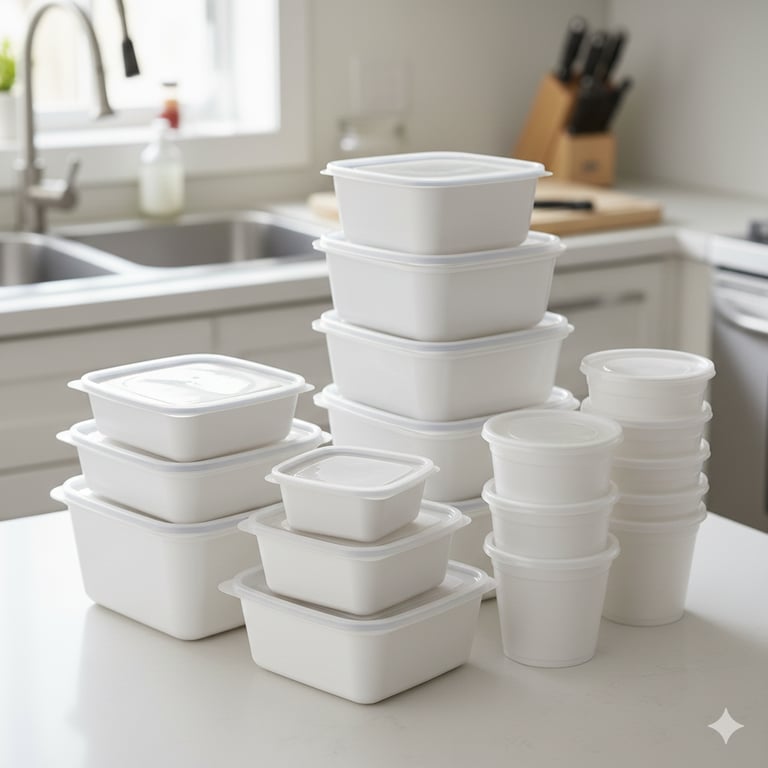
It is true that storing the containers piled up, one into the other and their lids stored separately, lets you pack quite a few containers in a space versus if you store the containers with their lids on.
But I’m sure you would agree with me that every time you need a particular sized container, locating its perfect lid from a pile of mixed lids turns out to be quite a nightmare as it is time consuming and sometimes frustrating when we don’t find the perfectly fitting lid.
So personally, I find that storing these containers with their lids on is the best approach.
3. Glass containers:
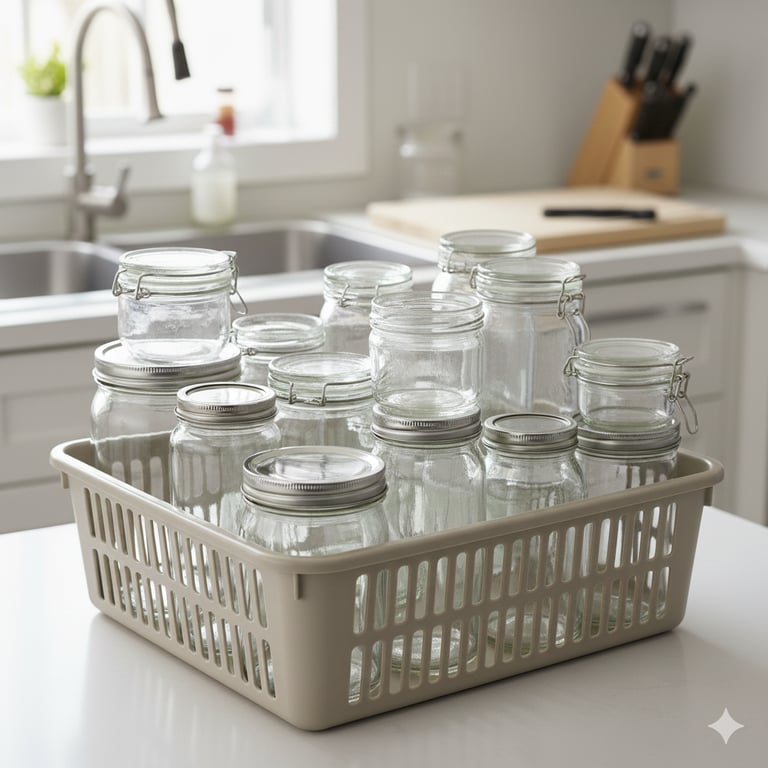
These are the containers that come with your pickles, sauces, ghee, etc. Glass containers are the safest containers for storing your foods and you can reuse them as long as you like. Again, the best way to store these containers is also with their lids on. I like to store my glass containers in a deep, sturdy plastic basket. The advantage is that whenever I have a need for these, I can just peek at the basket where I can see all the glass containers at one shot, in one single location.
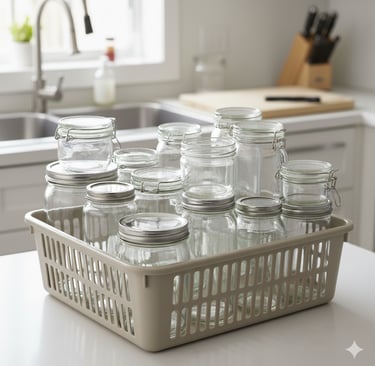
Now that we know what we are dealing with, the bigger question remains: how do we prevent these items from taking over our cabinets?
How to decide how many containers to keep?
1. Analyse how many food containers you actually need of each kind.
For e.g. In my case, I do need to use a lot of plastic food containers (more than 20 containers sometimes) for only two occasions in a year. So, I try to collect the plastic containers over the year for this purpose.
With respect to glass containers, I like to repurpose them to store home-made ghee, additional spices and other condiments. Empty wine and sleek sauce bottles are mostly repurposed for storing cooking oil.
2. Once you have analyzed your own requirement, designate one location/home for each of these containers.
For eg. In my case, I have designated one deep, sturdy plastic basket for storing my glass containers ( as shown above). I have designated one cardboard box for storing all the white plastic food containers.
3. Once the designated location/home gets filled up, start discarding or donating the extra containers.
This is important. If we don’t do this, very soon we will end up with piles of food containers and they will slowly start creeping into other spaces and ultimately end up as clutter. It is very important to understand that every storage space is limited.
✨ By following these three simple steps—analyzing your needs, giving every item a 'home,' and respecting your space limits—you can stop the container clutter before it starts.
At Make Simple, we love to help you organize your homes so that you start living and enjoying your space more, rather than getting overwhelmed with unnecessary clutter.
Let’s start making your home simple, one container at a time!

